
Tiling Window Managers: Worth it or meme?
1766494113895054.png
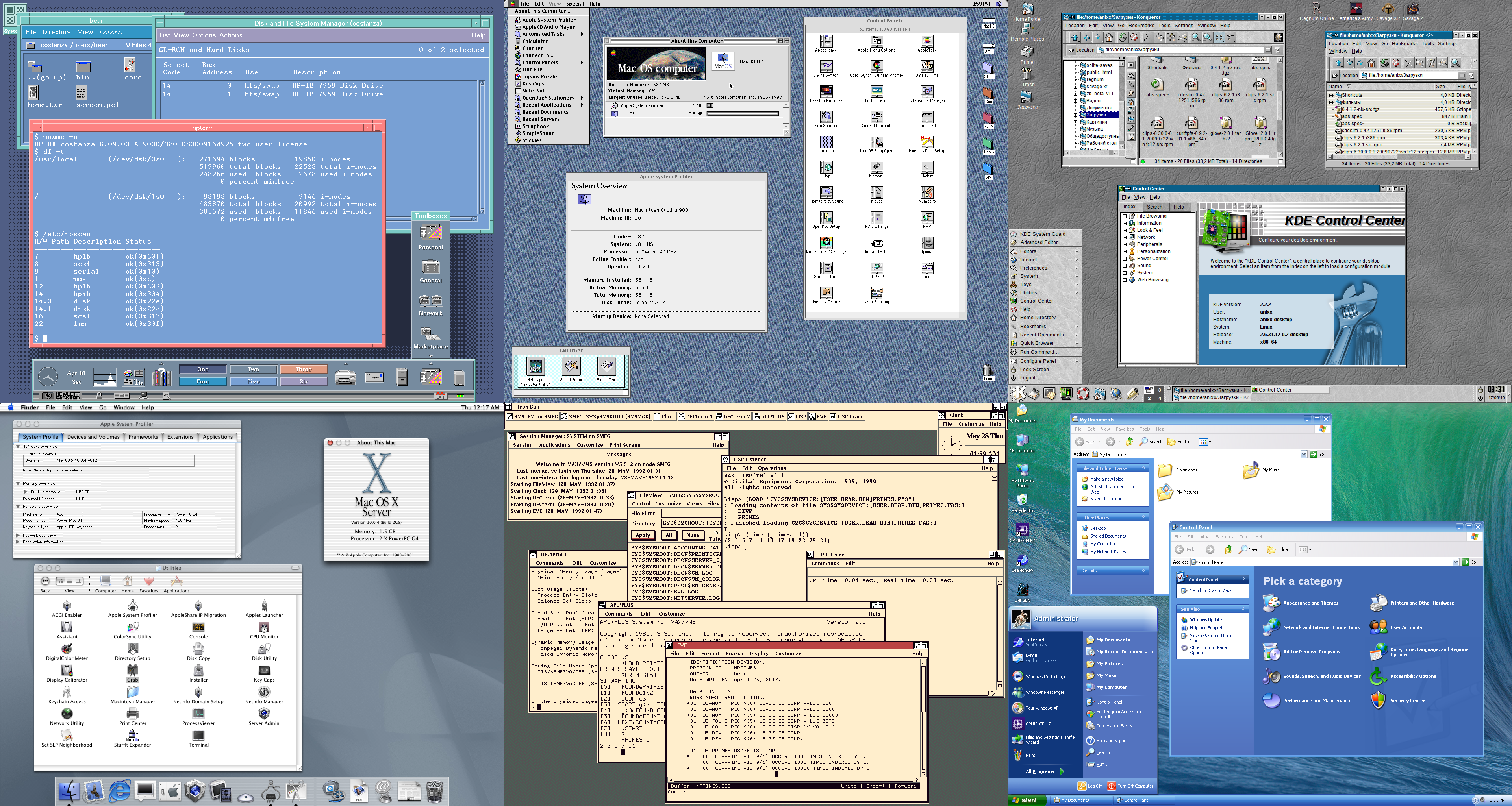
Over the few years I've been using Linux, I've used many different desktop environments, as well as a few twm (mostly i3 and dwm), and while I liked the workflow these type of environments offered, I'm not entirely sure I'd call them "superior"; not because they're bad, but because the so called "inferior" way of managing programs isn't as bad as some might claim.
>window organization
Having your system automatically organize your windows is really nice, which is something I liked from dwm. It's incredibly useful if you work with many different terminal windows at the same time. However, if you're used to work with one program at a time, or if you simply prefer GUI programs, then tiling windows could be seen as useless. Not to mention, sometimes you don't want a program taking all the space available in your screen, specially if you're working with one of those wide monitors.
>"ricing"
When using a twm I usually keep the customization quite simple: changing the colors, wallpaper and maybe add some transparency, however some people take it to the next level to the point such customization could be seen as ridiculous or egregious. I do understand the appear behind it, but I think allowing such level of customization can lead some to waste their time doing just that instead of actual work, and while this isn't a fault of twm themselves, I just don't see this happening as much with your everyday desktop environment. You could argue ricing is just the way some people express themselves, which is fine, but it's amazing just how much this has affected the perception of people outside of the Linux bubble, with many thinking that is how Linux is supposed to look or be used.
>bloat
Yeah I get it, anything that isn't a tty running cat, sed & echo is "bloat", but honestly as much as I dislike the actual bloat some desktops such as KDE or Gnome have, I do admit you'll (almost) never find yourself in a situation where a feature you want isn't present; unlike a barebones window manager where if you want a certain feature then you gotta implement it yourself by gluing small programs together. This is fine if you know what you're doing, but your average Joe will definitely no want to do any of that, opting instead for something where everything is already set up for him.
I don't really have the numbers to back this up, and it might just be my perception on the matter, but I feel like users of twm are a minority when compared to those of common desktops, but even then the former managed to influence the way others view and perceive Linux as a whole. I'm currently using KDE simply because I had issues with dwm in the past, and while I do dislike some of KDE's unecessary "features" and dependencies, I would be lying if I didn't say it's been pretty comfy so far, and I still consider it to be the best desktop environment currently available on Linux (for better or worse). I think I might come back again to dwm someday, even if merely for nostalgic reasons, but who knows.
Anyway, do you guys prefer floating or tiling windows? What type of setup do you use? There were some interesting ones in that one desktop thread, at least there was more variety compared to your average r/unixporn front page.
Replies:
>>12355
2026-03-24_13-24-51.png
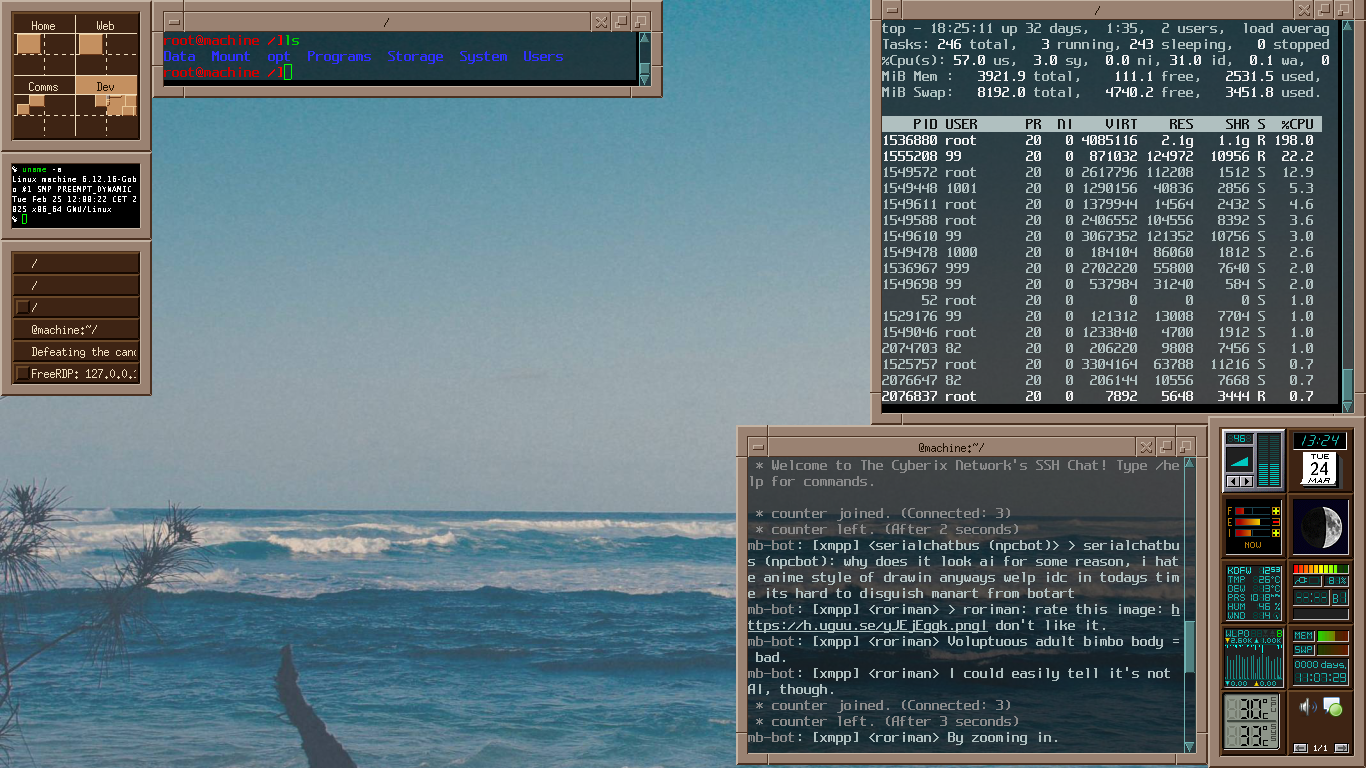
I use FVWM which can be configured to act however the user needs it to act. I like floating though
I've used both and opted in the "end" for floating. GUI Dialogs were pain in the ass and generally there were a lot of applications that REALLY didn't like being shoved into a specific geometry. Other than that it is simply preference. I like to see my wallpaper and having a book reader software in the middle without being maximized and without having to fiddle with the WM (as in making a specific bind for it or explicitly enabling floating windows). If I want to use maximal space it is easy enough to just drag it the side of the screen, open another and drag it to to left. Now everything is maximized while dynamically resizing on changing the window size. Honestly it feels more like an constrainment to have your windows automatically shoved into a certain size and pattern based on the available space.