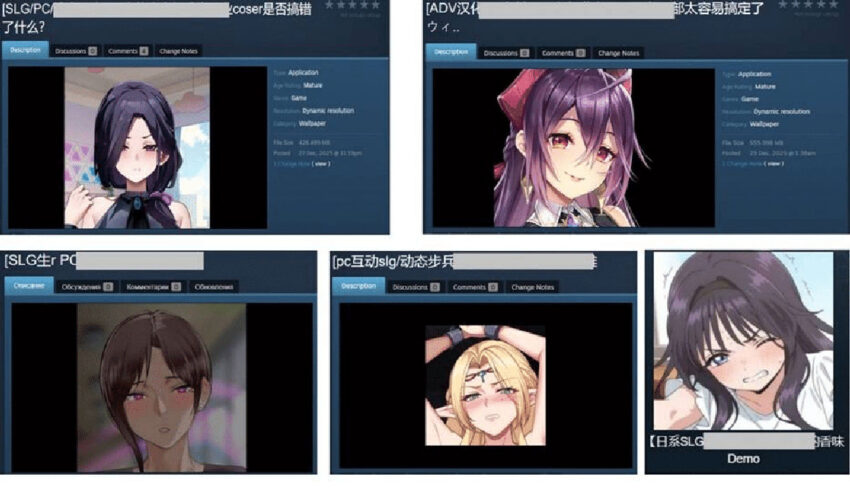
[AutoMod] action=keep R:9 E:8 N:8 C:9 | This post provides a detailed analysis of the malware distribution methods. It directly elaborates on the initial news and adds valuable technical insight.
dozens-of-malicious-wallpapers20.png
dozens-of-malicious-wallpapers30.png
That supposed detailed information:
https://securelist.com/dozens-of-malicious-wallpapers-found-on-steam-workshop/120186/
When we analyzed them, we caught two different methods the attackers were using to spread their malware:
An archive containing the executable wallpaper alongside the malicious files. This payload usually consisted of compromised EXE files, DLLs, or malicious scripts.
In other cases, attackers threw a curveball by hiding the malware inside a password-protected archive. Either the victim was tricked into typing the password, or a script handled it automatically. The attackers would hide the password in plain sight – either right in the archive's name or inside a JSON configuration installed along with other wallpaper files. For all the other variations, the payload triggered automatically when the user selected and applied the wallpaper.
Inside an infected game wallpaper
Main screen of the wallpaper application
On the surface, this wallpaper sample (above) we uncovered in December 2025 looks completely harmless. Once launched, there's absolutely nothing to trigger your suspicion. The built-in game boots up flawlessly, runs smoothly, and the desktop controls work exactly as they should. But behind the scenes, a full-blown infection is underway. Within just a few minutes, a user might suddenly realize their Steam account has been hijacked, or find their computer crippled by malware, with their files being encrypted by ransomware or their system performance tanking because of a hidden crypto miner.
How the malware deploys
Once the game wallpaper launches, it drops a backdoor file called Synaptics.exe (part of the DarkKomet malware family) straight into the victim's system. At the same time, an executable named ._cache_GAME1.exe fires up to boot the actual game, NTRaholic.
But that ._cache_GAME1.exe module is doing double duty. It simultaneously installs a custom version of a system library called AggregatorHost.dll with a payload inside. This modified library has one main objective: track down the Steam app on the computer and hunt for account credentials.
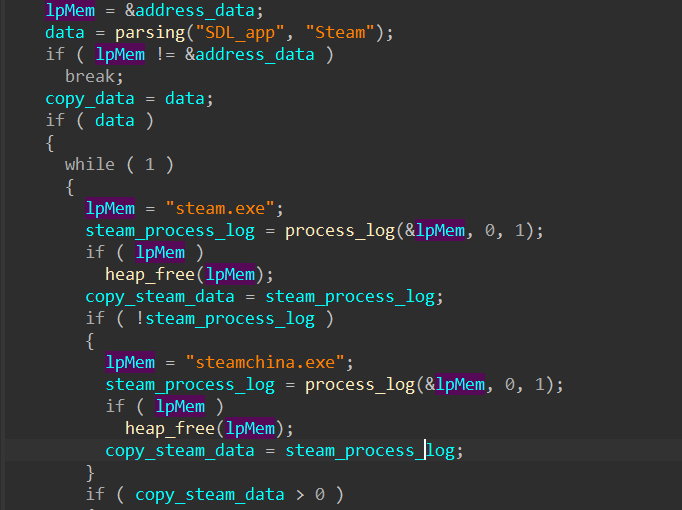
Looking for the Steam app
Next, the modified library hijacks the user's live Steam session.
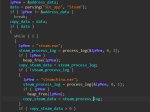
Hijacking the Steam session
Hijacking the Steam session
After that, the compromised AggregatorHost.dll sends all the collected data to a server controlled by the hackers at hxxp://120.48.156[.]17/ey.php. Once the attackers have control of that active session, they can use the victim's account to upload even more malicious wallpapers to Steam Workshop.
Attribution and victims
The game wallpaper described above is just one flavor of the many variations we uncovered during our research. By weaponizing the application wallpaper feature, bad actors have successfully distributed almost every type of malware under the sun – from popular infostealers and backdoors to crypto miners and botnet loaders.
Because the range of tools being used is so diverse, we suspect this isn't the work of a single mastermind. Instead, it looks like multiple scattered, independent hacking groups are all jumping on the same trend. Right now, the primary targets are gamers in China. The wallpaper art styles and titles are tailored specifically to them, and the data backs it up: our security systems caught a staggering 89% of the malicious download attempts happening right there. That said, there's absolutely nothing stopping these attackers from pivoting and launching a similar campaign in any other part of the world. Russia comes in second place for total downloads at 5.5%, followed by a smattering of other countries and territories: Singapore (1.4%), Hong Kong (0.9%), Germany (0.9%), Vietnam (0.9%), India (0.5%), and Canada (0.5%).
Malicious app wallpaper downloads by region
How to stay safe
Our investigation proves that even trusted platforms like the Steam Workshop aren't completely safe from malware. In most cases, we caught old, familiar threats such as DarkKomet, the Lumma and Vidar infostealers, and the RenEngine loader. Kaspersky solutions can easily spot and block all of these payloads, no matter how clever the packaging is, thanks to our proactive security layers. Here are some of the specific threat detection verdicts assigned to the objects we discovered during our research:
HEUR:Trojan-PSW.Win32.gen
HEUR:Trojan-PSW.Win32.Python.gen
HEUR:Backdoor.Win32.DarkKomet
Trojan-Dropper.Python.Agent
HEUR:Trojan-Ransom.Win32.Gen.gen
PDM:Trojan.Win32.Generic.
By the time this post went live, the Steam team had already scrubbed the identified malicious wallpapers and links from the platform. However, given how frequently new infected wallpapers keep popping up on the Steam Workshop, you shouldn't rely on Steam to catch everything. It's highly recommended to run an antivirus scan on these types of wallpapers before you actually apply them.
Indicators of compromise
MD5
95856f2ce428c728d9781d3296558068
af080780cca2acd1d082ce01e7cc346a
c133c3dd9f7d6934598025047df41abf
d1693bbff456ae8fa3360446706df6da
8c2cc585ad8a13a72a704c0fda0c9854
b9fa763a53da3eea742d0f3c845a8c09
ded08ae5df7f1b12e5fdb767dbbed0b1
20965254e29104986e11939decd39549
18dedc0009f0927cba6425c84cce9883
0f4f01c6d495abb37403072dd017ce8d
5620f01284329f561b1839a36be55355
fe1f6485013cd5e6d5cf718049b0b8d6
74414ed4b63aadec039b603c32762b80
C2 servers
http://202.144.192[.]29
http://202.144.192[.]29/audit.php
http://202.144.192[.]29/download2/Themes2.zip
http://120.48.156[.]17
http://120.48.156[.]17/ey.php?ka=user1&id
http://brightly[.]to
http://brightly[.]to/download2/Themes2.zip
https://www.dropbox[.]com/s/zhp1b06imehwylq/Synaptics.rar?dl=1
https://docs.google[.]com/uc?id=0BxsMXGfPIZfSVzUyaHFYVkQxeFk&export=download
Malicious wallpapers
https://steamcommunity[.]com/sharedfiles/filedetails/?id=3603213159
https://steamcommunity[.]com/sharedfiles/filedetails/?id=3591930233
https://steamcommunity[.]com/sharedfiles/filedetails/?id=3584318845
https://steamcommunity[.]com/sharedfiles/filedetails/?id=3436875036
https://steamcommunity[.]com/sharedfiles/filedetails/?id=3633494498
https://steamcommunity[.]com/sharedfiles/filedetails/?id=3556591375
https://steamcommunity[.]com/sharedfiles/filedetails/?id=3635875825
https://steamcommunity[.]com/sharedfiles/filedetails/?id=3601924072
https://steamcommunity[.]com/sharedfiles/filedetails/?id=3605588743
https://steamcommunity[.]com/sharedfiles/filedetails/?id=3553253793
https://steamcommunity[.]com/sharedfiles/filedetails/?id=3462675635
https://steamcommunity[.]com/sharedfiles/filedetails/?id=3605621824
https://steamcommunity[.]com/sharedfiles/filedetails/?id=3610240788
https://steamcommunity[.]com/sharedfiles/filedetails/?id=3610366547
Update, June 17
We have since confirmed that the malicious wallpapers were present in the app as early as August 2025.