>>18220
Gentoo is a dying corpse, just like Debian. It is infiltrated by fucking retards and corposhit bootlickers.
I checked it out recently and it is in far worse shape than it was in 2021. You can't build an initramfs without pulling absurd amounts of shit you didn't need. I was able to build initramfs easily without dracut and numerous amounts of packages I don't need. Now it's just a hard dependency, and it's nearly impossible to build initramfs without dracut.
They're also dropping eudev and pulling more dependencies from systemd, also making those a hard requirements, also OpenRC maintainer is a huge retard and a faggot, that is just ruining the project. Can't wait until the OpenRC will require half of the systemd garbage just to work properly. Also you won't be able to have separate /usr soon, but you don't need it, do you?
Compare Gentoo to FreeBSD with poudriere and you will see how much garbage Portage is. poudriere is more simple, actually maintainable, the code is not spagetty python shit, and it is just more powerful and effective.
>>18094
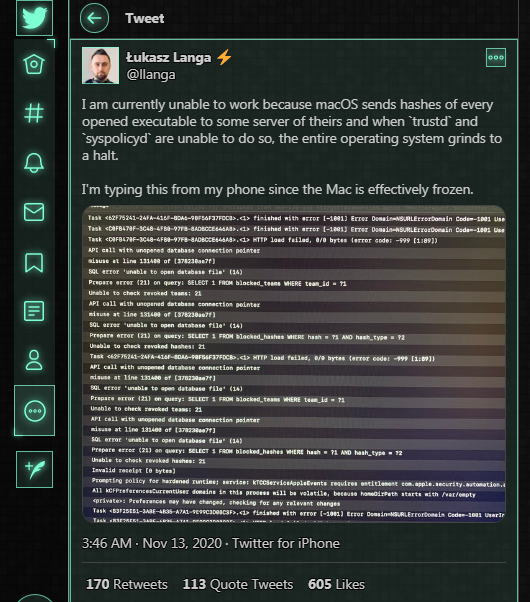
I hate how we came to this state where we don't own our computers. Like, yeah, they're physically there, and you can install operating system that is free and the source is open, but can you understand what is happening behind the scenes? Most people use distros with systemd and GNU utilities, that are millions of lines of code, but can you actually study the code, that is purposely bloated so that the vendor (RedHat) has more control over the software you use? Both GCC and Linux require GIGABYTES of storage just to download them, and even more if you wish to actually build them. This is called bloat monopoly, when the software that begins somewhat small and insignificant grows into millions and millions of lines that no one could understand. And if no one could understand how it works, it grows even more, just slapped on top instead of redoing some parts and improving the software. Then capitalist corporations get involved, hire countless of people, hijack the source code and WONTFIX patches or improvements. The examples are obvious, GNOME, GTK, systemd, Linux, Xorg, Wayland they're all hijacked by RedHat faggots to take away your freedoms, by creating software that is both unportable and impossible to understand. The design is purposely complicated because it's made by illiterate retards on payroll to build a walled garden so you can't control your computer.
Have you ever tried wiritng graphical application for Wayland? Or for Linux DRM? Believe me, it's so horrible that you will beg to be shot just not to touch this shit again in your life. Same for the sound system. And, honestly, for everything else.
Linux (and Unix) in general is made on deprecated 1970 concepts, that were good back then for what they were: providing access to one mainframe with multiple terminals and time-sharing. Now you don't need that for your computer, but you have no choice. Hardware access is unclear and obfuscated, realistically speaking only the vendor can design the drivers for the video card, that is essential for basic interaction with a computer. Yes, VESA modes exist, but they're limited to couple of resolutions and that's it.
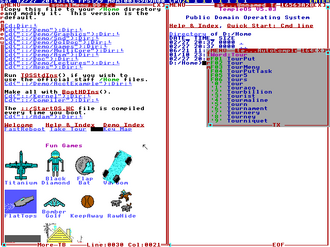
Terry was unironically right, most people just don't seem to understand what he was trying to make. He wanted to bring Commodore 64's simplicity to the modern world. He made sure that TempleOS runs at Ring 0, has no memory protection, no preemptive multitasking with complicated scheduling, clearly designed and has everything for you to have fun using a computer. He created graphics libraries and programming language that is part of the operating system (and the shell), instead of being slapped on top. He created hyperlinked rich text format, so that you're not limited by plain text. He was forward thinking, he wanted to bring the joy of computing back.
You didn't understand TempleOS. No one really did. Unfortunately, it is mostly seen as the "schizo" creation, and by that shallow judgement people miss what actually is a TempleOS. It is a Commodore 64, with no "shiny things", and no limits. No one is trying to hold you back by obfuscating and hiding your computer's resources under layers of abstraction, without giving you the ability to bypass those abstractions. No one's setting a permissons on which files you can and cannot open, see or write. It has no sudo, no root. Only 640x480, TUI, and no usermode, as God intended. TempleOS had it's own flaws, but Terry wasn't no Operating System researcher. He was just a regular guy with a computer. A regular guy that wanted to make computing fun again. A regular guy, who was mentally ill, who was struggling, but still was stubborn enough to build his own operating system, programming language, and a compiler. That's why he is forever a hero.