I am starting a hobby thread here because I want to. Simple as.
Any hobby is welcome as long as it has to do with building or creating something somehow. The exception is software. Farming, trains, sticker collections, I don't care, share it.
For my own hobby I brew. Last thing I finished was a mead. It had big downs in the brewing process and also I didn't add yeast nutrition at the start so it has a hint of some pungent smell. Stressed yeast, especially due to low nitrogen, can produce some phosphates that give an unpleasant smell and taste but are no risk to health. Luckily enough it only produced enough to give a slight smell and taste that most don't think about or notice unless they know about it.
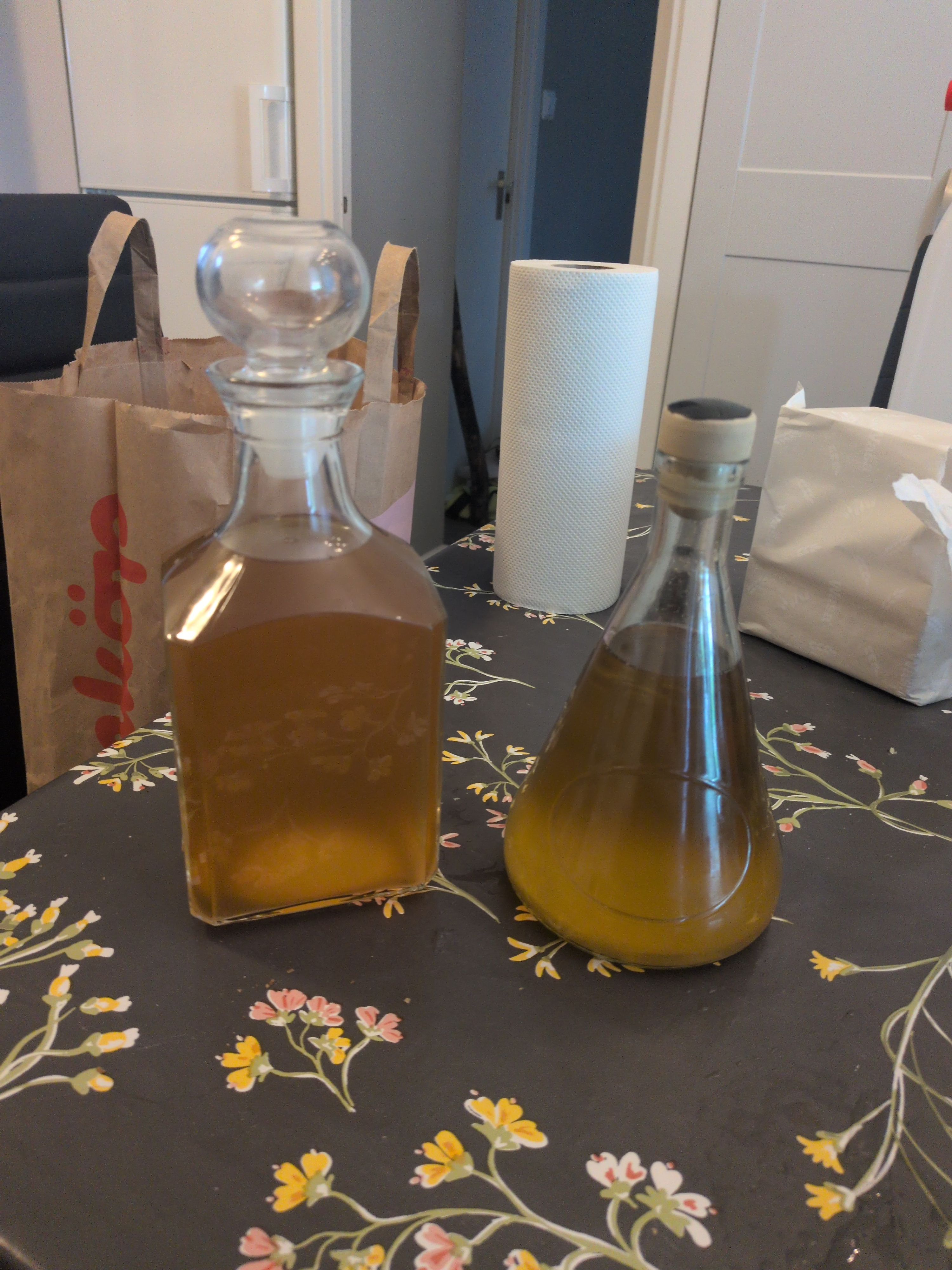
Anyway, I decided to distill some of it. The process I used was freeze distillation, also known as jacking. I made some Honey jack, picrel.
How do you go about freeze distillation? It's very simple: Get some PET bottle, empty it, and fill it (not entirely full tho', don't be retarded) with the mead (honey wine, or any home brewed beverage of your choice), then throw the bottle in the freezer. Wait one day. Now you have some ice in there. Get another container that you can use to have the PET bottle upside down in so it can pour and drip out the alcohol.
Alcohol doesn't freeze at the temps water does. Also, most chemicals responsible for flavours also do not like to freeze and end up being diluted in the alcohol. When you let it drop do so in the freezer. Wait until all ice is white so you know you got every last drop of alcohol (there is a surprising amount in the ice flakes when they are still stained, don't rush it, let it drop slowly in the fridge. I suppose if you can make it fit in a freezer to drip that's even better).
Ok, so lets say you made a mead with 10% alcohol. How do you know what the end result is? Well, you compare how many liters you started with and how many you have at the end. You get an average. So you start with 10 liters and end up with 2 liters. That is 5 times less water. If you didn't stress it and let it drip properly before throwing the ice away you can think of it like this:
10% alcohol > 10 parts alcohol and 90 parts water.
Only water was removed > 10 parts alcohol is preserved
Only a fifth remains > 20 parts remaining
This gives you 10 parts alcohol and 10 parts water e.g. 50%.
To go higher is pretty hard.
Brewing normally is very easy.
Any hobby is welcome as long as it has to do with building or creating something somehow. The exception is software. Farming, trains, sticker collections, I don't care, share it.
For my own hobby I brew. Last thing I finished was a mead. It had big downs in the brewing process and also I didn't add yeast nutrition at the start so it has a hint of some pungent smell. Stressed yeast, especially due to low nitrogen, can produce some phosphates that give an unpleasant smell and taste but are no risk to health. Luckily enough it only produced enough to give a slight smell and taste that most don't think about or notice unless they know about it.
Anyway, I decided to distill some of it. The process I used was freeze distillation, also known as jacking. I made some Honey jack, picrel.
How do you go about freeze distillation? It's very simple: Get some PET bottle, empty it, and fill it (not entirely full tho', don't be retarded) with the mead (honey wine, or any home brewed beverage of your choice), then throw the bottle in the freezer. Wait one day. Now you have some ice in there. Get another container that you can use to have the PET bottle upside down in so it can pour and drip out the alcohol.
Alcohol doesn't freeze at the temps water does. Also, most chemicals responsible for flavours also do not like to freeze and end up being diluted in the alcohol. When you let it drop do so in the freezer. Wait until all ice is white so you know you got every last drop of alcohol (there is a surprising amount in the ice flakes when they are still stained, don't rush it, let it drop slowly in the fridge. I suppose if you can make it fit in a freezer to drip that's even better).
Ok, so lets say you made a mead with 10% alcohol. How do you know what the end result is? Well, you compare how many liters you started with and how many you have at the end. You get an average. So you start with 10 liters and end up with 2 liters. That is 5 times less water. If you didn't stress it and let it drip properly before throwing the ice away you can think of it like this:
10% alcohol > 10 parts alcohol and 90 parts water.
Only water was removed > 10 parts alcohol is preserved
Only a fifth remains > 20 parts remaining
This gives you 10 parts alcohol and 10 parts water e.g. 50%.
To go higher is pretty hard.
Brewing normally is very easy.